Key Word Transformation:
The 2-Mark Technique
Part 4 is worth the most marks per question (0, 1, or 2). Each sentence tests a specific grammatical structure. Learn the patterns and you can score full marks on every sentence.
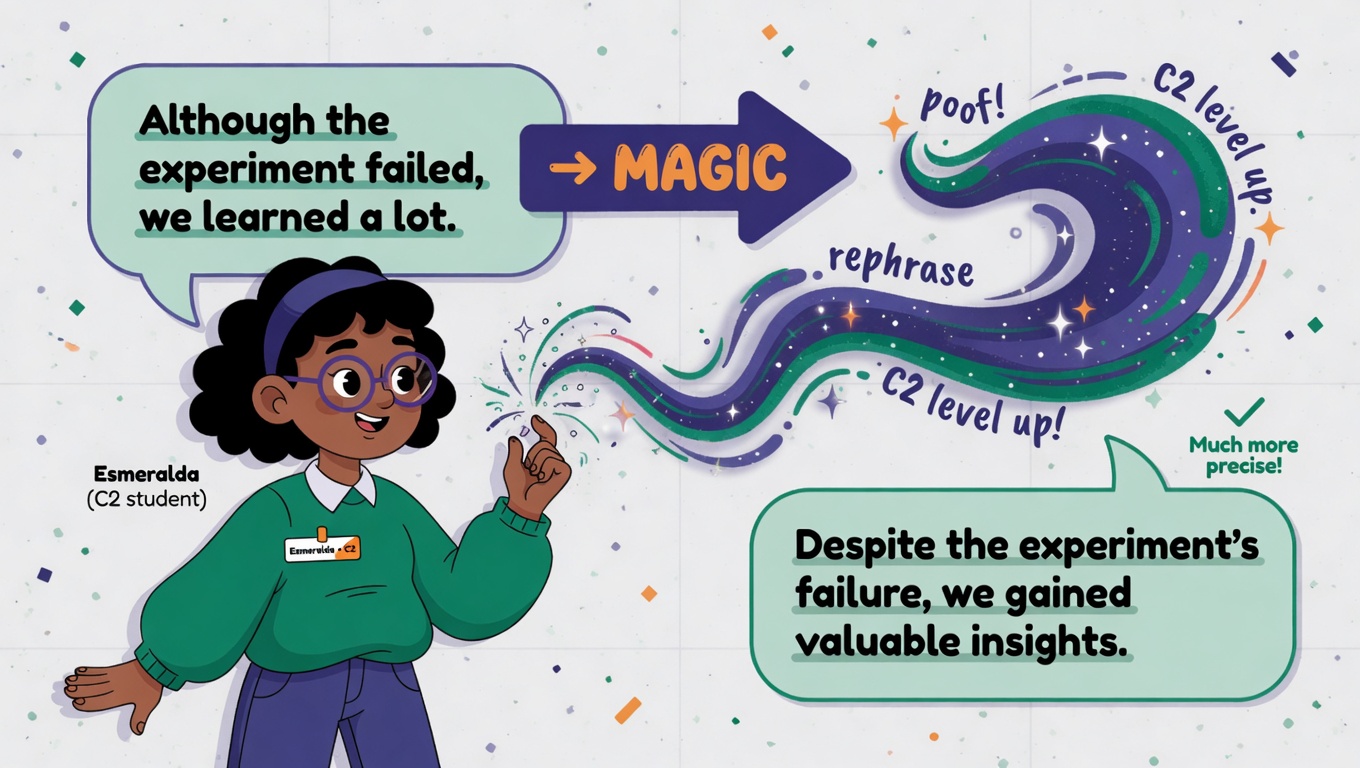
How do you score full marks on C2 Key Word Transformation?
In 2026, Cambridge C2 Part 4 awards 2 marks per answer for sentences rewritten in 3–8 words using a given key word unchanged. Identify the forced structure — passive, inversion, conditional, or reported speech — then count words precisely; spelling errors cost the second mark.
How to Score 2 Marks on Every Key Word Transformation
A reliable step-by-step technique to identify the required structure and transform sentences accurately in C2 Part 4.
Look at the original sentence and the key word. Common structures include inversions, conditionals, passives, reporting verbs, modals, and fixed expressions.
Ask yourself: Does this need to become passive? An inversion? A conditional? A reported speech structure? This is the most important mental step.
Remember: between 3 and 8 words including the key word. Never change the key word itself.
Watch out for word order in inversions, correct tense in conditionals, and whether you need to add 'that', 'to', or change pronouns.
Read the new sentence. Does it mean exactly the same as the original? If not, adjust.
1How Does the 2-Mark Scoring System Work?
Each sentence is marked for TWO elements (1 mark each)
⚠️ Word limit: 3–8 words (including the key word)
Contractions count as TWO words (e.g. "don't" = "do not" = 2 words). Going over 8 words = automatic 0.
2What Are the 6 Core Transformation Types?
Passive Voice
They announced the results yesterday.
ANNOUNCEDThe results were announced yesterday.
Move the object to subject position. The agent (by + noun) is optional if not needed.
Reported Speech
"I will call you tomorrow," he said.
PROMISEDHe promised to call me the following day.
Watch tense backshift and time/place adverb changes (tomorrow → the following day).
Conditionals
You must study harder or you will fail.
UNLESSYou will fail unless you study harder.
Unless = if not. Remember: unless is always used with a positive verb form.
Modal Verbs (Deduction)
I'm sure she didn't take your keys.
HAVEShe can't have taken your keys.
can't have + past participle = negative deduction about the past. must have = positive deduction.
Comparatives
No other city in Spain is as large as Madrid.
LARGESTMadrid is the largest city in Spain.
No other X is as ... as Y → Y is the most ... Superlative transformation.
Causative Have / Get
A mechanic is going to repair her car.
REPAIREDShe is going to have / get her car repaired.
have / get + object + past participle. Subject arranges for the action, not does it themselves.
3Which 4 Mistakes Cost You Both Marks?
The core meaning of the original must be preserved. Adding emphasis, changing tense or negating something the original doesn't negate = 0 marks.
You may NOT change the key word. Use it exactly as given. "HAVE" is HAVE — not "has", "had", or "having" UNLESS the grammar requires it as an auxiliary verb form.
Count every word including articles, prepositions and auxiliaries. Contractions (don't) count as two words. Write the word count lightly in pencil.
E.g. "insist on doing" not "insist to do". If the key word requires a fixed preposition, you must include it.
What Should You Check Before Submitting?
- Key word is unchanged
- Between 3 and 8 words total (including key word)
- Core meaning matches the original
- Correct tense, agreement and word form used
- Fixed prepositions included where required
- Contractions counted as two words
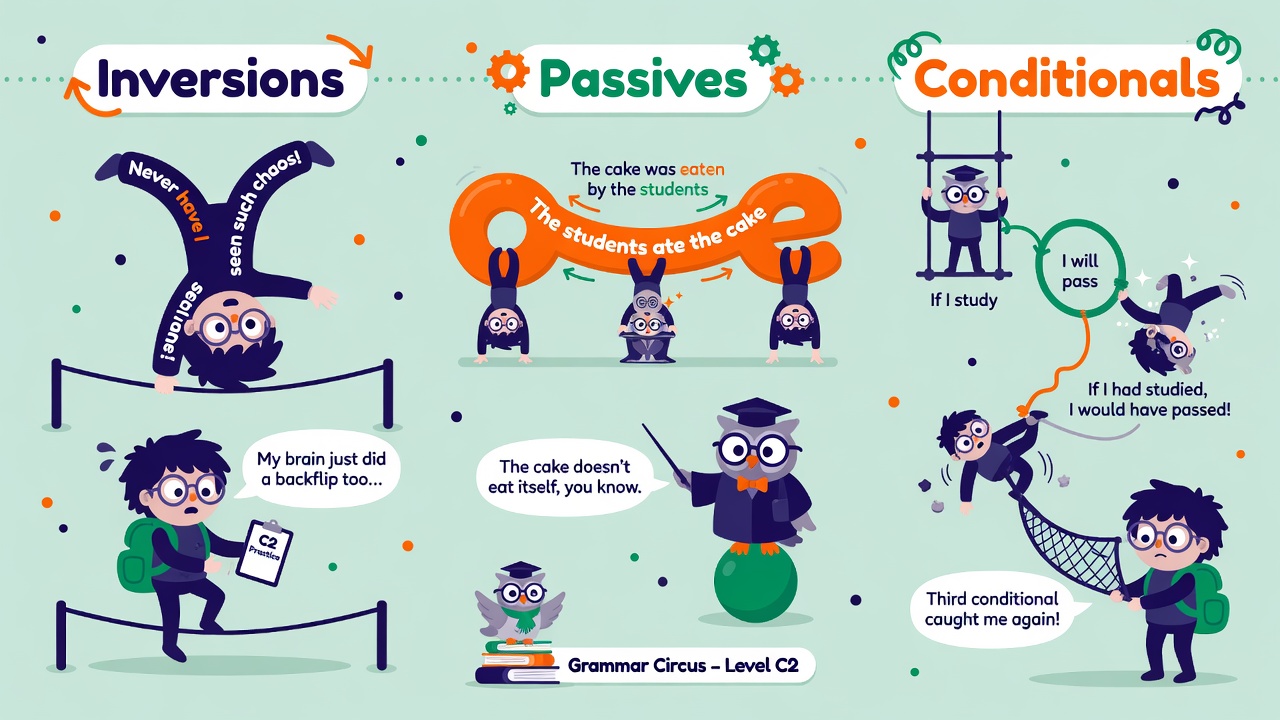
Ready to Practice Key Word Transformation?
Apply the 2-mark technique with our free Part 4 exams. Real exam format, instant feedback.
Start Part 4 Practice NowWhere Are Key Word Transformation Rules Defined?
- Cambridge University Press & Assessment: C2 Proficiency Teachers Handbook — retrieved 2026-06-11
- Cambridge University Press & Assessment: C2 Proficiency exam overview — retrieved 2026-06-11
- Cambridge University Press & Assessment: Cambridge English Scale — retrieved 2026-06-11
Related C2 Study Guides
Written for Cambridge C2 candidates by José Luis García and checked against the official sources listed above. Last updated: March 2026.